Mask
Weapon-specific protective mask, FIE-tested mesh steel.
New to the sport? Don't rush to buy. NJFA provides sanitized gear so you can try fencing first — and when you're ready, we'll help you get the right equipment.
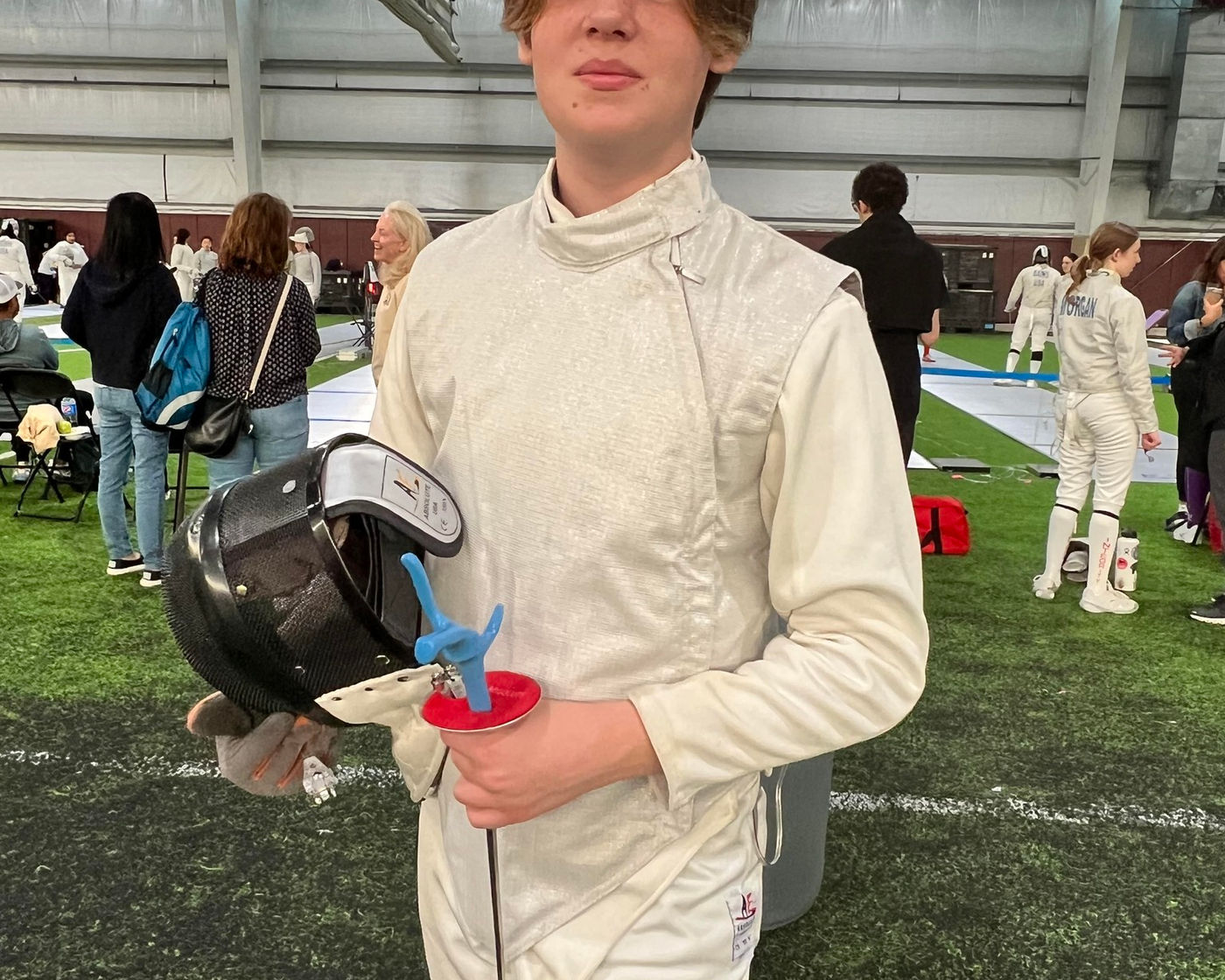
Long sport pants, sneakers, and a t-shirt — plus a towel and a water bottle. That's all you need to begin.
There's no need to buy equipment right away. NJFA provides the basics for an initial period so your child can try the sport before committing. All NJFA equipment is sanitized after each session and is never shared between participants.
Once a fencer decides to stick with it, it's worth investing in quality gear that lasts for years. Not ready to buy? We also offer equipment rentals for $35/month, and our on-site pro-shop is fully equipped to outfit you.
What competitive fencers eventually own. Beginners can build up to this over time — ask a coach what you need next.
Weapon-specific protective mask, FIE-tested mesh steel.
Padded protective fencing jacket.
Worn beneath the jacket for an extra layer of protection (plastron).
Required for female fencers; recommended for younger children of any gender.
Conductive vest for foil & sabre (registers valid touches).
Weapon-appropriate glove (foil/épée gloves differ from sabre).
Foil, épée, or sabre. Two are required at competitions; advanced fencers carry three.
Connects your weapon to the scoring system. Two required at competitions.
For foil & sabre. Two required at competitions.
Fencing pants. Required for competition; training attire (covered legs) is fine until then.
Knee-length socks worn with knickers. Required for competition.
Recommended for grip and footwork; clean indoor shoes protect the strip.
To carry and organize all your gear to class and competitions.
Athletic cup for male fencers who prefer one.
Book a free 20-minute introductory lesson and feel what fencing is all about — no experience, no equipment, no pressure.